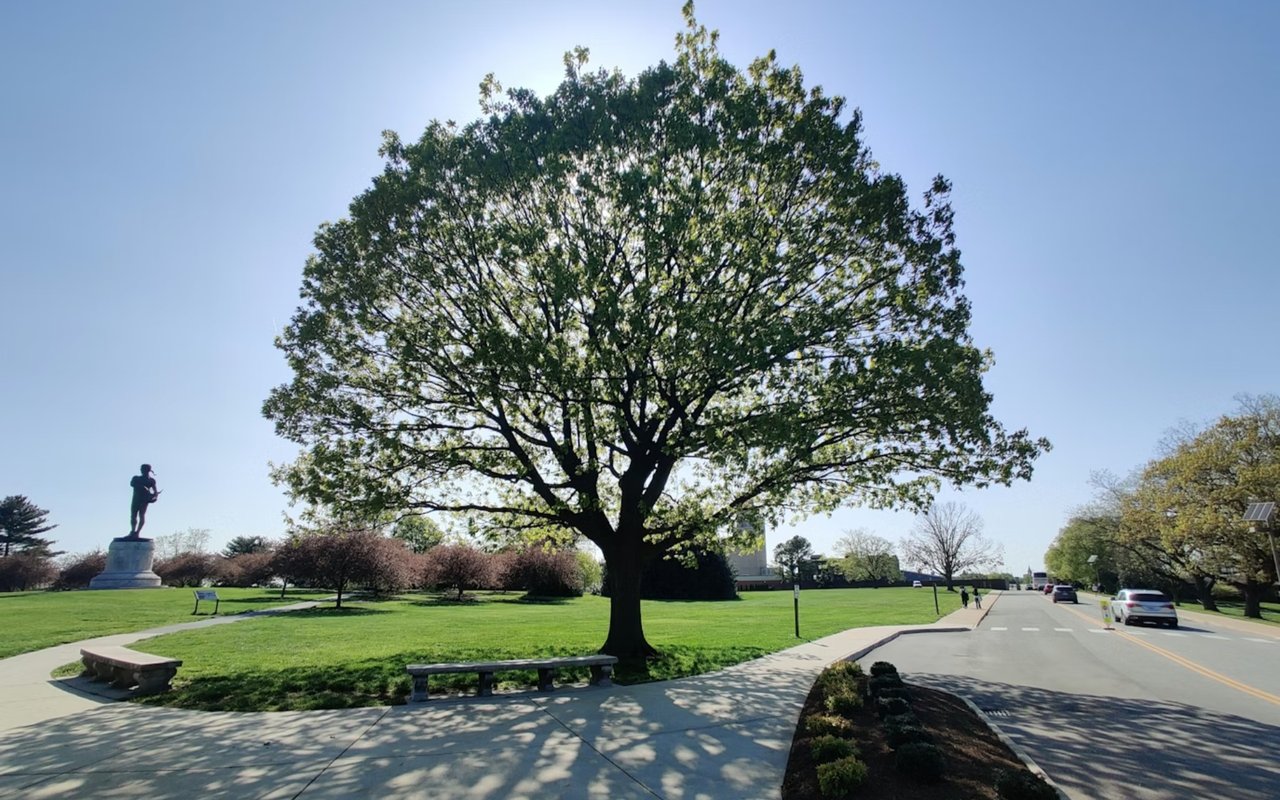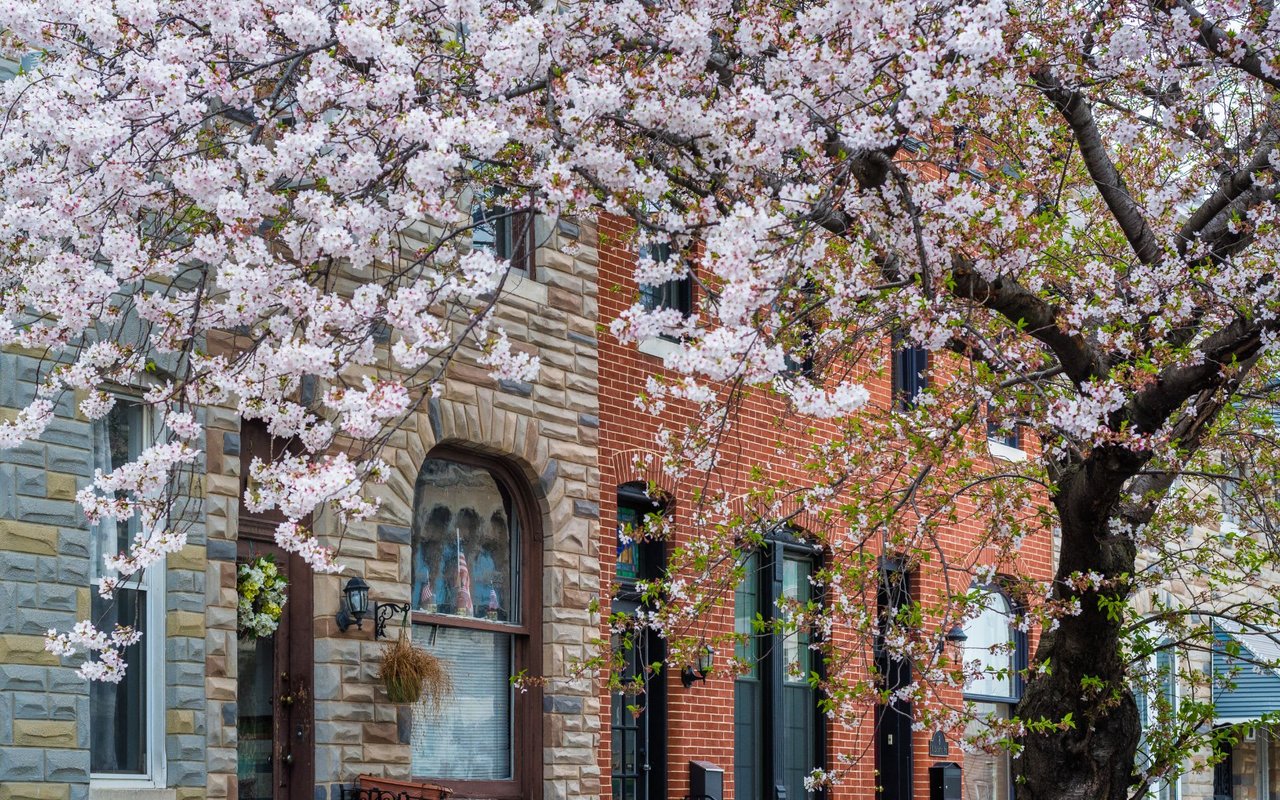
Nine in the morning at Tiber Park, and the vendors are setting up before the market officially opens. By the time the Old Ellicott City Farmers Market hits its 9 a.m. start, there are already lines for empanadas, sourdough, and heirloom tomatoes the color of a stoplight. Kids climb onto picnic benches with croissant sandwiches. A musician named Mike Walls plays something that started as Bob Dylan and ends up as "Wheels on the Bus" because a toddler asked. It is, by any measure, an ordinary Saturday in a small Maryland town.
Ten years ago this July, that same stretch of ground was under six feet of water.
The flood that hit Old Ellicott City on July 30, 2016, was the kind experts later described as a 1-in-1,000-year rain event. Two people died. Main Street's storefronts filled with mud. Less than two years later, in May 2018, it happened again, nearly identical in force, and the town had to start over a second time before it had finished starting over the first time. This summer marked the ten-year anniversary of that first flood, and the local press spent late July revisiting what has and hasn't changed. The honest answer, once you look past the ribbon-cuttings, is that the infrastructure has moved faster than the habits.
The Engineering Nobody Sees
The reason a Saturday farmers market feels unremarkable again isn't just goodwill or grit. It's a series of holes in the ground that most visitors will never notice, part of Howard County's Ellicott City Safe and Sound Plan, a seven-project engineering effort built specifically to keep floodwater from reaching Main Street in the first place.
| Project | Location | Completed | Capacity |
|---|---|---|---|
| H-7 Pond | Route 29 / Route 40 interchange | October 2022 | 4.2 million gallons |
| Quaker Mill Pond | Rogers Avenue | February 2023 | 3.3 million gallons |
| H-4 Pond | Frederick Road, west of US 29 | Targeted for fall 2025 | 5.5 million gallons |
| Extended North Tunnel | Papillon Drive to the Patapsco River | Expected Fall 2027 | 18-foot diameter, roughly a mile long |
The tunnel alone carries a $141 million price tag, part of a plan that started as a five-year, $50 million commitment and has grown considerably since. It is currently being bored through solid granite more than 100 feet underground. None of this is visible from a park bench at Tiber Park, which is exactly the point. The town isn't hoping the next storm goes differently. It built something specific so that it would.
There's already a small data point on whether it's working. In July 2025, a fast-moving storm dropped roughly 1.5 inches of rain on Ellicott City in under an hour. Main Street closed to traffic as a precaution around 6:13 p.m. and reopened by 6:55 p.m., once water receded. Forty-two minutes, not forty-two days. That's the difference the ponds and the tunnel are designed to make, and on that particular evening, they made it.
A Bigger Bet Than a Shop Reopening
Storefronts reopening after a disaster is one kind of signal. An institution moving its headquarters into a former county courthouse and staying there is another kind entirely, because it assumes decades, not seasons.
That's what happened in March 2026, when the Capitoline Center opened in Ellicott City's former circuit courthouse. It now houses the Howard County Arts Council's headquarters, a black box theater, rotating art exhibits, and the Asian American and Pacific Islander Cultural Center. Lisa Scarbath, a resident artist there and a member-owner of the Artists Gallery on Main Street, put it simply: it gives people a reason to come to town for something other than the shops and restaurants.
That distinction matters if you've watched Ellicott City's recovery play out in waves before. Shops can reopen and close again with the next hard year. A county arts headquarters relocating into a 150-plus-year-old building is a different kind of commitment, the sort that assumes the building, and the town around it, will still be standing when the next renovation cycle comes due.
The Restaurant Wave Tells a Different Story Than the Last One
After the 2018 flood, Main Street lost restaurants it didn't get back. Portalli's, Cacao Lane, and the well-loved Bean Hollow Cafe all left town for good. Gordon Ramsay's crew even filmed an episode of "24 Hours to Hell and Back" spotlighting struggling businesses there, and one of the featured spots, Jaxon Edwin Social House, closed anyway once the pandemic arrived.
What's opening now reads differently. Dave Carney, who has owned The Wine Bin on Main Street for eighteen years, spent the last several years wanting to open something else in town. This summer he did: Vesper at Pike & Main, a cocktail bar and restaurant at 8210 Main St., built with Washington, D.C. chef Rachel Bindel. The space seats 72 across a downstairs bar, a dining room, and a patio, and Bindel's French-trained menu shifts every few weeks, built around dishes like crispy pork belly and Maryland blue crab. A few blocks over, Tony's of N.Y. leased 2,494 square feet in the Enchanted Forest Shopping Center this spring. And up the hill, the Phoenix Emporium, a Main Street fixture for forty years, relocated and merged with Ellicott Mills Brewing Company to become Phoenix Upper Main.
These aren't pop-ups testing the waters. They're multi-year leases and build-outs from people who already know this town's history and are betting on it anyway. Carney said as much himself after this year's SpringFest, the busiest the festival has been for his shop in its twelve-year run: "It was slammed. I love seeing the town hopping."
The Habit That Hasn't Caught Up
Here's the part that doesn't show up in a ribbon-cutting photo. Lexi Milani and her husband Matt used to run Rumor Mill Fusion Bar & Restaurant on Tiber Alley, a spot that survived the 2016 flood only to be destroyed by the second one in 2018. They never reopened a restaurant. Matt now cooks for Governor Wes Moore's family at Government House in Annapolis. Their friends who still own businesses in Ellicott City, Lexi says, close them during bad storms as a matter of course.
"They either know people won't come," she said, "or they don't want to be there."
That instinct made sense once. It's a rational response to two catastrophic floods inside two years. But it's worth sitting with the gap it creates now. The infrastructure has moved the actual odds of a repeat 2016 or 2018 event meaningfully lower than they were a decade ago. The reflex to shutter at the first heavy rain warning hasn't moved at the same pace, and probably won't for a while longer. That's not a criticism of the people who own these shops. It's a reasonable lag between what got engineered underground and what got lived through above it. If you've noticed a favorite spot going dark on a day when the rain never amounted to much, that's most likely what you're seeing: caution sized for the old town, applied to the new one.
What a Saturday Actually Looks Like Now
If you live here and haven't been down to Main Street in a while, the current version of a weekend looks roughly like this:
- Morning at the Old Ellicott City Farmers Market in Tiber Park, running Saturdays from Memorial Day weekend through late October
- A walk past the Forget-Me-Not Factory, whose owner retrofitted the storefront with waterproof flooring and a float-activated safety gate after four decades on Main Street, a small monument to how seriously the town takes the next storm even as it keeps opening new businesses
- Dinner reservations at Vesper at Pike & Main, or a casual plate at Tony's of N.Y. if you're closer to Enchanted Forest
- Whatever's currently on view at the Capitoline Center, which changes often enough to be worth checking before you go
None of this erases what the town went through twice in two years. It just means the physical risk and the emotional memory of that risk are no longer running on the same clock. The engineering is ahead. The instinct to watch the sky is still catching up, and given what this town has been through, that's not a flaw worth fixing quickly.
If you're weighing a move to Ellicott City, or already call it home and want a clearer read on how a specific block or price range holds up against everything above, William Weeks has spent years working this corridor and can walk you through it directly. Schedule a consultation whenever you're ready.